.png)
Learning Area / Learning Area Details
By - Clement
To participate effectively in Creative Arts and Sports, every learner should have:
Personal items: Comfortable clothing, sportswear, and shoes suitable for physical activity.
Learning materials: Art books, sketch pads, pencils, crayons, paints, brushes, and locally available materials for craftwork.
Digital tools: Access to digital devices (e.g., tablets or computers) for watching learning videos and exploring online cultural performances.
Hygiene and safety items: Water bottle, towel, and swimming gear (where applicable).
Positive attitude: Willingness to explore, create, perform, and work with others respectfully.
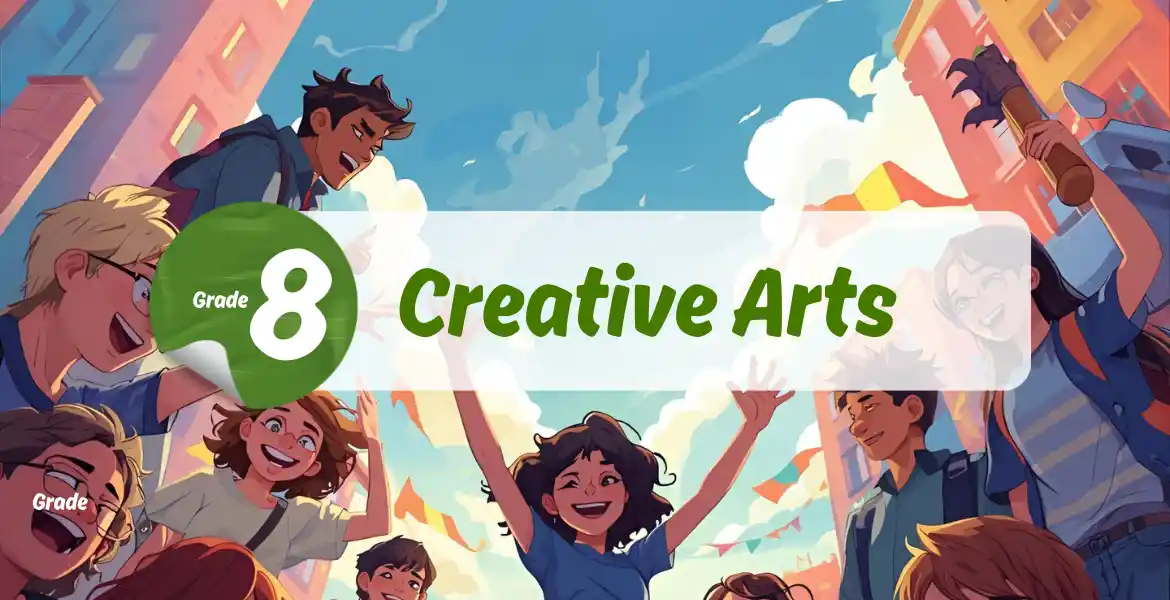
Creative Arts and Sports is a multidisciplinary subject that integrates Performing Arts, Visual Arts, and Physical Education.
It aims to develop learners’ creativity, self-expression, cultural understanding, and physical well-being. Through the strands of Creating and Performing, Indigenous Kenyan Crafts, Swimming, and Appreciation in Creative Arts and Sports, learners explore Kenya’s rich cultural heritage while developing skills in art, movement, and critical analysis.
The learning area nurtures communication, collaboration, innovation, and appreciation of diversity — essential competencies for lifelong learning.
By the end of Grade 8, the learner should be able to:
Demonstrate creativity and imagination through artistic and physical performances.
Express ideas, emotions, and cultural values through dance, song, drama, and art.
Create simple crafts using local and recycled materials responsibly.
Apply physical fitness skills through swimming and indigenous games.
Appreciate Kenya’s cultural diversity and promote unity through arts and sports.
Use digital tools to enhance creativity, learning, and performance.
Demonstrate respect, teamwork, and discipline during creative and physical activities.
Analyze and give constructive feedback on performances and artistic works.
Here is a highly appropriate video that explains and shows a cultural-creative dance (Grade 8 context). This works well because it is labelled Grade 8 Creative Arts and shows live performance elements of cultural dance in Kenya.
This video: Shows a real cultural creative dance performance in a Kenyan context. Useful for observing how movement, staging, and story-elements combine. Helps learners visualise the “plot” in a dance: beginning, development, climax, resolution.
This lesson helps learners understand how to develop a plot for a cultural creative dance. A plot gives meaning to a dance by organizing events in a logical sequence that communicates a story, message, or theme. Learners will explore real-life issues affecting their community and express them through movement, expression, and rhythm in a creative dance format. By the end of the lesson, learners should be able to: • Identify and describe the stages of a dance plot. • Develop a creative dance storyline that addresses community issues. • Appreciate how storytelling and organization enhance performance.
Here is a video that provides good visuals and explanation of traditional songs, instruments and dance in Kenya. The video effectively shows learners real examples of how songs & instruments support cultural dance.
Content in this sub-strand helps learners understand how songs and instruments bring life and meaning to cultural creative dances. It explains that songs provide rhythm, melody, and messages, while instruments guide timing and enhance expression. Learners explore different traditional instruments such as drums, rattles, and lyres, and learn how these are used in various cultural occasions. They also practise creating simple dance movements that reflect daily cultural activities like milking or planting. Through performance, learners develop creativity, coordination, teamwork, and appreciation of cultural heritage.
This video demonstrates various Kenyan traditional dances and explains their societal functions — ideal for classroom discussion.
Cultural creative dances are expressive performances that combine movement, music, and cultural traditions to communicate meaning, celebrate life events, and preserve heritage. They serve important roles such as: Preserving culture and identity by passing traditions and values to younger generations. Promoting unity through community celebrations and teamwork. Communicating stories and morals using movement, songs, and instruments. Marking rituals and celebrations like weddings, harvests, and initiations. Expressing emotions such as joy, grief, or gratitude. Supporting tourism and livelihoods through performances. Building skills like coordination, creativity, and discipline. Learners observe, perform, and reflect on how cultural dances teach values, connect people, and promote pride in Kenyan heritage.
This video explains step-by-step how to build a cultural dance storyline using music, theme, and movement — ideal for classroom demonstration.
Topic: Creating a Storyline for a Cultural Creative Dance This topic helps learners understand how to design and organize a meaningful storyline that gives direction and emotion to a cultural creative dance. A storyline is the sequence of ideas, actions, and feelings that guide movement, song, and instrumental rhythm so that the dance tells a story reflecting a community’s culture, traditions, or everyday life. Learners are guided to choose a cultural theme (such as harvest, market day, or initiation), identify characters or roles, and plan the beginning, middle, and end of their dance. They then select appropriate songs or rhythms to express the mood and create movement phrases that align with each story section. Through this process, learners learn to organize and connect dance, music, and cultural meaning into one coherent performance. The main focus of this lesson is to show that every dance tells a story—not just through steps, but through expression, sequence, and rhythm. Creating a storyline helps dancers communicate ideas clearly to the audience and maintain cultural relevance while showing creativity and teamwork. By the end of the topic, learners should be able to: Design a short dance storyline based on a chosen cultural theme. Combine movement, music, and expression to convey meaning. Work collaboratively to perform and explain their creative dance piece. Overall, this sub-topic promotes creativity, cultural appreciation, communication, and organisation skills in line with CBC competencies.
This is a short, practical tutorial that match the sub-strand. it is effective in class for demonstrations and student practice. The video mainly focuses on costume construction and materials.
A concise student/teacher guide that explains how to create effective movement motifs (4–8 counts), design safe and engaging formations, and make simple culturally-informed costumes and props with local materials. It includes rehearsal and safety tips, assessment methods (practical, portfolio, oral), and an editable checklist so learners can track progress. The document is color-coded for easy navigation and classroom printing.
This sub-strand introduces learners to the key features that make up a cultural creative dance, focusing on how culture and creativity blend in performance. Learners explore the meaning of culture and how traditional dances reflect community values, beliefs, and identity. The lesson guides them to identify, describe, and apply the main elements that form a cultural creative dance — including movement patterns, rhythm, formation, costume, expression, use of space, and the cultural message conveyed through the dance. The main focus is to help learners understand how cultural dances can be creatively adapted while maintaining their original significance. Through observation, discussion, and practical group work, learners study examples of Kenyan cultural dances, analyse their elements, and participate in creating short dance pieces that demonstrate both cultural authenticity and creativity. The sub-strand therefore develops learners’ appreciation of cultural heritage, creativity in artistic expression, teamwork, and confidence in performance.
This video demonstrates how to plan, structure, and write a simple dance or creative performance script. It covers character creation, sequencing, and integrating cultural meaning—making it ideal for Grade 8 CBC learners.
The Word document presents clear, learner-friendly short notes on how to write a script for a cultural creative performance. It explains what a performance script is, outlines its key elements (theme, characters, movement/instrument/songs cues), shows how to structure the script, and highlights the importance of cultural idioms and coordination between song, instrument and movement. It also sets out what learners must do (writing and rehearsal) and what will be assessed. The document uses colour-coded headings and sub-headings for easier navigation and is fully editable so you can add specific examples or local cultural references.
This short educational video demonstrates how learners can identify and organize ideas and themes in dance, explaining how culture, movement, and storytelling work together to communicate messages in performances.
These short notes provide learners with a clear understanding of how to develop and express ideas and themes in a cultural creative dance. They explain the difference between ideas (messages) and themes (main subjects), how to plan a performance around them, and how songs, rhythm, and movement express emotions and stories. The notes encourage creativity, collaboration, and appreciation of cultural identity — key competencies in the CBC Grade 8 Creative Arts curriculum.
In this lively performance, Goede Hoop Marimba Band — a vibrant youth marimba ensemble from South Africa — take to the stage at the International Marimba and Steelpan Festival, organised by Education Africa. The ensemble skilfully reinterpret a classical piece (notably by Antonio Vivaldi) using marimbas rather than the usual orchestral instruments. Released to spotlight young African musical talent, the performance is energetic, tight-knit and full of polished choreography and percussion precision. Key features to notice: The marimba arrangement: multiple players synchronise mallet strikes, creating a rich layered sound. Stage presence: the band’s formation, posture, movement between pieces and audience interaction support both the music and the visual appeal. Cultural-educational context: The festival aims to showcase marimba and steelpan instruments, promote musical education and cross-cultural exchange. Visual/aural contrast: The classical piece is given a new life through marimbas, demonstrating creative adaptation of traditional instrumentation. This video is ideal for a class in creative arts — especially when exploring themes such as adaptation of culture, performance skills, musical arrangement and ensemble coordination.
The Word document provides clear, concise notes explaining the role of musical instruments in cultural creative dance: how different instruments add rhythm, support movements, express cultural messages and enhance performance. It offers examples of Kenyan instruments, links them to dance themes, and includes questions and activities for learners to engage with the topic. The design uses coloured headings for appeal and is fully editable so you can customise for your class.
This video demonstrates the coil-and-stitch basketry technique as applied in a Grade 6 crafts class. A craftsman uses bamboo sticks and raffia weaving with local reeds, guiding a student through the steps of creating a basket. The footage was captured and recorded by CBC master James Okoth, showing the entire process from preparing the materials to weaving and finishing the basket.
This Word document contains summarized, easy-to-understand notes based on the Grade 8 Creative Arts and Sports Scheme of Work. It includes: Overview of Kenyan Folk Dance – role of folk dances in culture, elements of performance, and appreciation of cultural diversity. Key features of a good performance – rhythm, coordination, expression, costumes, and teamwork. Coil and Stitch Basketry Technique – definition, steps, and how the technique works. Classification of materials – natural vs. man-made basketry materials. Applications of the technique – items created using coil and stitch (baskets, mats, trays, etc.). This document is editable and suitable for lesson preparation, revision notes, or student handouts..
The Word document contains simplified and structured short notes on: Natural materials used in coil and stitch craft. Step-by-step preparation methods (cleaning, drying, softening, dyeing, sorting). Key characteristics of well-prepared fibres. Importance of proper preparation for durability and neat stitching. Safety guidelines during preparation. The document uses coloured headings, bullet points, and simple language to ensure clarity and learner engagement. It is fully editable to allow adding images, school-specific notes, or extra activities.
This video demonstrates how natural materials—especially sisal and grasses—are prepared before they can be used for coiled basketry. It shows: Selecting suitable fibres Cleaning and stripping fibres Drying fibres properly to avoid mould Softening fibres by rolling, soaking, or beating Optional dyeing of fibres using natural or synthetic dyes How prepared fibres are stored before weaving The video is practical, clear, and suitable for classroom demonstration, helping learners visually understand material preparation techniques.
The Word document provides learners with simplified and CBC-aligned notes covering: Meaning of good craftsmanship Types of materials suitable for coil & stitch (sisal, grass, reeds, threads, decorative fibres) Characteristics of high-quality materials (strength, flexibility, dryness, cleanliness) Step-by-step method for selecting and collecting materials Safety guidelines when handling fibres The layout uses coloured headings for engagement, short bullet points for clarity, and structured sections to help learners understand and revise easily.
The selected video demonstrates the entire process of choosing suitable natural fibres for coiled crafts. It covers how to identify quality fibres, remove impurities, soften the strands for easy bending, and prepare them for coiling. Learners see real examples of sisal, reeds, and grass—helping them understand material characteristics, cleaning methods, and safe preparation practices. It supports CBC emphasis on practical, hands-on learning.
This Video: How to Hand-Sew African Style Baskets | Traditional Weaving Guide for Beginners demonstrates the beautiful art of hand-sewing African style baskets in a step-by-step guide! The video shows the techniques behind traditional African basket weaving, perfect for beginners and seasoned crafters alike. It shows how to discover the secrets to creating stunning, sustainable, and functional pieces that reflect the rich heritage of African craftsmanship. 🔹 Materials you'll need 🔹 Easy-to-follow weaving techniques 🔹 Pro tips for perfecting your basket Whether you're looking to add a personal touch to your home or embrace a new hobby, this tutorial will inspire your creative journey.
This Word file is a concise, teacher-friendly reference that learners can read and teachers can expand. It explains how to build simple dance motifs, combine them into sequences (16-count patterns), choose and change formations (circle, line, V-shape), and design safe, culturally appropriate costumes and props. Headings are colour-coded for visual appeal and quick navigation. It’s designed to be editable so you can paste in local songs, photos, or classroom rubrics.
he Word document provides: ✔ Clear sections for Grade 8 learners: Introduction to the topic Types of man-made materials used in basketry Steps for preparing man-made materials Importance of proper preparation Introduction to inverted breaststroke swimming Warm-up exercises Swimming safety precautions ✔ Features: Coloured headings for visual appeal Clean bullet-point structure Fully editable layout Simple language suitable for CBC Grade 8 This makes the notes ideal for teacher instruction and learner revision.
This video clearly demonstrates the correct body position, arm movement, leg movement, and breathing technique in an inverted breaststroke. This instructional swimming video shows: How the swimmer lies on their back in a streamlined floating position The reverse breaststroke arm action used in inverted breaststroke The inverted frog kick used to propel the body backward How to maintain balance and rhythm while on the back Proper breathing technique, with the face remaining above water Demonstrations from both underwater and surface views for clarity It is simple, slow-paced, and appropriate for junior learners.
These notes provide a simplified and structured explanation of the tuck dive, a key skill taught in the Swimming strand for Grade 8. Learners are introduced to what a tuck dive is and why divers use a compact body shape for faster rotation. The notes highlight the correct body posture, including bent knees, pointed toes, and holding the shins tightly. A step-by-step guide outlines the full technique—from warming up and taking off from the diving board to tucking, rotating, and making a clean entry into the water. Important safety measures are emphasized to ensure learners dive safely, such as checking pool depth, practicing under supervision, and maintaining body control. Lastly, the notes explain the benefits of mastering the tuck dive, including improved strength, confidence, and proper diving technique.
This video demonstrates how to perform a front tuck dive from a platform or board. It shows: How to take off correctly from an elevated position How to tuck your body: knees pulled to chest, toes pointed, hands on shins How to maintain a compact tuck shape during the dive How to prepare for entry into the water safely Watching this helps learners understand the correct body posture, muscle control, and the flow of a tuck dive — which are essential for executing it well and safely.
These short notes provide a comprehensive yet learner-friendly explanation of the inverted breaststroke technique for Grade 8 swimmers under the CBC curriculum. The notes begin by defining what the inverted breaststroke is—an upside-down variation of the standard breaststroke performed on the back to help learners clearly understand kick timing, arm mechanics, and body positioning. The document outlines the purpose and benefits of the drill, including improving the whip kick, developing timing, strengthening key muscle groups, and correcting common stroke errors. It also presents a set of step-by-step practical drills, such as floating kick practice, arm-only pulls, combined movements, and underwater pullout training. Safety guidelines and progression tips are provided to ensure learners practise responsibly and gradually build confidence. The notes also highlight common mistakes learners make and give simple corrective strategies. A Grade-appropriate practice set is included to guide structured training, along with a section for teachers to add further instructions, images, feedback points, or assessment information. Overall, the notes serve as a complete instructional guide for teaching and practising the inverted breaststroke, strengthening learner skills in technique, timing, body awareness, and water confidence.
The selected video demonstrates a fun, teacher-led drill where swimmers perform breaststroke-style pullouts and timing while upside down (on their backs or inverted underwater). The clip shows: How to streamline off the wall and adopt the inverted body position safely. The correct breaststroke pull/arm sweep while inverted (to train the underwater pullout feel). Timing cues linking the pull and the whip kick (emphasis on kick-sweep-glide). Suggestions for progressions and coach-led demonstrations for learners to copy.
The Word document is designed to be learner-friendly and teacher-friendly. It uses coloured headings to divide key sections, making it visually appealing and easy to follow. Because it's fully editable, you can add local pool rules, class-specific drills, or student names. The notes provide a clear explanation of the inverted breaststroke technique, its benefits, and common pitfalls.
In the video, a swimmer lies on their back in the water and performs the breaststroke kick in an upside-down position. It demonstrates: Proper body alignment (straight, relaxed, on the back) How to bend the knees and rotate the feet outward during the kick The “power phase” of the kick — pushing legs out and then bringing them together Recovery of the legs in a streamlined position This helps learners improve their breaststroke leg technique by practicing it in a different orientation.
The video demonstrates the forward tuck dive sequence from a springboard: approach stance on the board, proper take-off and push, quick pull into the tuck (knees to chest), tight body control in the air, and hands-first / streamlined water entry. It also highlights basic safety checks, such as verifying pool depth and ensuring the board is not slippery. The instructor uses slow motion for key elements so learners can see body shape and hand position before entry.
These short notes give teachers & learners a compact, classroom-ready reference covering objectives, safety rules, warm-up/cool-down routines, technique steps, practice tips, assessment ideas, and reflection questions. They’re written in simple language suitable for Grade 8 and arranged so you can paste straight into a Word file, color headers, and print or project.
In this video, the instructor demonstrates three different techniques for treading water in a shallow pool. The techniques shown include using both arms and legs, different types of leg kicks (like flutter kick and frog kick), and how to coordinate arm sculling with leg movement. The video is beginner-friendly, showing how to practice slowly, build stamina, and maintain a vertical and stable body position. This makes it very appropriate for Grade 8 learners learning water treading for the first time.
These short notes offer Grade 8 learners a clear and concise explanation of water treading. They cover the purpose, body positioning, arm and leg techniques, breathing, and safety precautions. The notes use simple language, align with KICD’s CBC approach (practical, learner-centered), and are easy to read, revise, and practice from.
This video shows three practical water-treading techniques, taught step-by-step in shallow water. Learners observe: Correct body posture How to use sculling with the hands Types of leg kicks (flutter, frog, eggbeater) Balancing, endurance, and transitions Slow, clear demonstrations suitable for junior learners Perfect for Lesson 2 progression.
Water Treading – Lesson 2 builds on the foundational skills learners acquired in the first lesson. It focuses on helping learners improve their stability, coordination, and endurance while treading water for longer periods. The lesson emphasizes the importance of safety, such as staying calm, maintaining proper breathing, and keeping safe distances in the pool. Learners also begin working on the progression to the inverted breaststroke, starting from a stable treading position and gradually leaning back while using arm sculling and an inverted frog kick. This smooth transition helps them understand how different swimming techniques connect. A key part of the lesson is group practice, where learners work in teams to observe one another, share supportive feedback, and identify strengths and areas for improvement. This enhances teamwork and encourages positive peer interactions. Through inquiry questions, learners reflect on the value of water treading as a lifesaving skill, how sculling contributes to staying afloat, and the challenges involved in transitioning to inverted breaststroke. By the end of the lesson, learners should confidently apply safety measures, demonstrate improved treading ability, transition effectively into inverted breaststroke, and show appreciation for collaboration and feedback within their groups.
This classroom-friendly video showcases a selection of traditional Kenyan games, including chasing/tagging variations commonly played by children. It demonstrates how the games are set up, the basic rules, and how players move and tag safely — useful for introducing learners to authentic examples of tagging games in Kenya.
The notes are structured for Grade 8: clear headings with colours, simple language, classroom activities, safety tips, expected learning outcomes, and sample questions for revision. It’s ready for you to add pictures, local examples, or assessment rubrics. Tagging games are traditional chasing games widely enjoyed by children across Kenya. They involve one or more players, known as taggers, who try to touch others to tag them. These games are important not only for fun but also because they help learners develop physical fitness, quick reactions, teamwork, and cultural appreciation. There are several variations, including Tig (basic tag), Freeze Tag where tagged players must stop moving, Team/Chain Tag where players form a chain as they are tagged, and Safe Zone Tag where players run to safe areas to avoid being tagged. Each variation strengthens different physical and social skills. Learners develop abilities such as speed, agility, endurance, spatial awareness, communication, and decision-making. To play safely, pupils must use appropriate sportswear, warm up before the game, follow boundaries, avoid rough contact, and play under supervision. The lesson involves classroom and field activities such as warm-ups, reaction drills, short game sessions, and reflection discussions. Teachers assess learners through observation of skills, teamwork, safety habits, and ability to follow rules. By the end of the lesson, learners should understand the rules of tagging games, perform tagging movements safely, cooperate well with teammates, and show improved fitness and agility.
The video showcases traditional Kenyan playground games, including tagging variations, their setup, rules, and demonstrations. It illustrates how these games are played in schools and communities and highlights cultural significance. This helps learners connect classroom analysis to real examples.
The Word notes are structured to support both teacher preparation and learner revision. They include practical activities, evaluation criteria for performance analysis, safety guidelines, and sample questions to drive classroom discussion. Headings use colours to improve readability; content is concise and CBC-aligned.
This video shows how to analyse a performance (in sport) by breaking it into stages: observing actions, noting what happens, interpreting the meaning behind the actions, and evaluating against criteria (technique, decision-making, teamwork). Although the context is sport, the analysis framework (observe → describe → interpret → evaluate) can easily be applied to creative arts (dance, verse, artwork) as well as sports. It helps learners see how to use clear criteria, take notes, and apply qualitative judgments.
This section introduces learners to the basic skills needed to analyse performances and sports activities. It teaches them how to observe, describe, interpret, and evaluate creative and sporting performances using simple and clear criteria. Learners explore how to analyse different forms of expression such as verse, dance, 3D artworks, and sports games like netball, helping them to better understand and appreciate artistic and sporting activities. Learners are guided to look at important evaluation elements including technical skill, use of space, creativity, expression, teamwork, safety, and cultural relevance. These criteria help them judge performances fairly and meaningfully. The content also breaks down how to analyse specific items: Verse performances, where learners focus on voice, expression, message, and interaction; 3D artworks, where they look at balance, technique, materials, subject matter, and creativity; Netball games, where they observe movement, positioning, decision-making, and sportsmanship. The lesson activities involve watching short performances or game clips, taking structured notes, discussing observations in groups, and preparing short evaluation reports. Learners also practise giving constructive feedback and using checklists to guide their assessment. Assessment methods include teacher observation, peer feedback, reflective writing, and group presentations. These approaches help learners develop confidence in analysing both artistic and sporting performances.
No Review found
 Grade 7
 Grade 8
Discover Additional Learning Opportunities
 Form 2
 Form 3.png) Form 3
Form 3
 Grade 7
 Grade 3
 Grade 8
.png) Grade 10
Grade 10