.png)
Learning Area / Learning Area Details
By - Sydney Otieno
For effective teaching and learning, the following are required:
Charts and flashcards
Real objects (foods, soil, water containers)
Pictures and digital videos
Weather chart and simple thermometer
Models (market, home, school)
Crayons, journals, drawing books
Audio devices (for sound activities)
Observation and discussion
Sorting and grouping activities
Role play and dramatization
Drawing and colouring
Outdoor learning (weather observation)
Songs and poems
Digital learning where available
Mathematics (sorting, grouping)
Creative Activities (drawing, modelling)
Health & Hygiene practices
Road safety and environmental care
Communication and collaboration
Critical thinking and problem-solving
Creativity and imagination
Digital literacy
Learning to learn
Self-efficacy
Respect
Responsibility
Unity
Social justice
Nutrition
Road safety
Environmental conservation
Hygiene
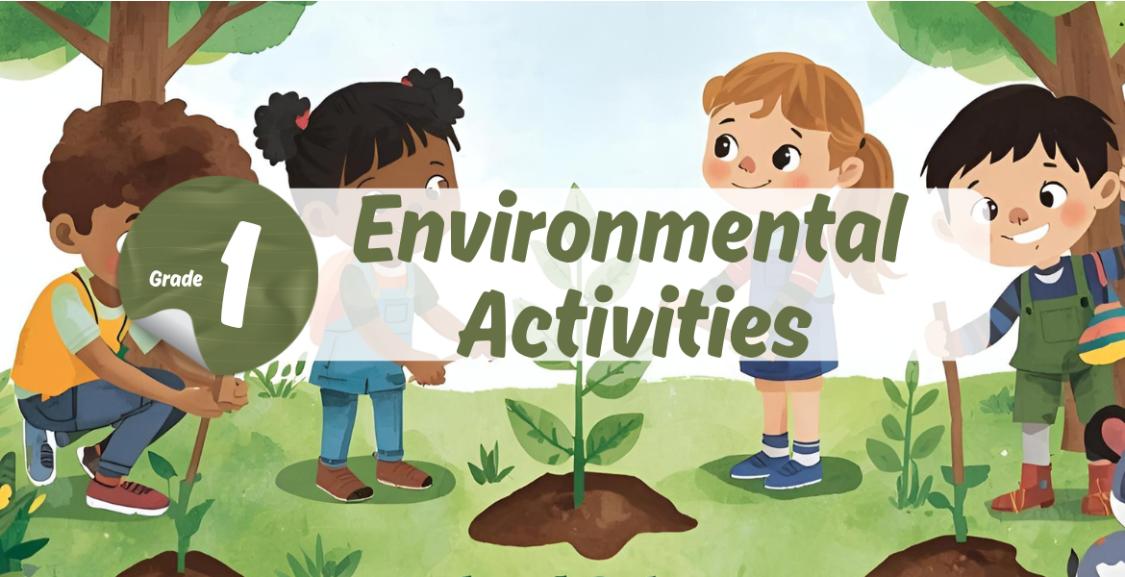
Environmental Activities is a learning area that helps learners understand:
Their social environment (family, school, market)
Their natural environment (weather, soil, sound)
Important resources (water, food)
The subject enables learners to:
Explore their surroundings
Develop observation skills
Appreciate nature
Practice safety
Develop responsible behaviour
By the end of the term, learners should be able to:
Identify basic family needs
Categorize foods from plants and animals
Describe features of home and school
Explain safety measures
Identify roles of people in the market
Describe the sky during day and night
Identify different weather conditions
Record daily weather changes
Identify ways of playing with soil safely
Identify and create different sounds
Recognize danger sounds
Identify sources of water
State uses of water
Practice water conservation
Learners will:
Show awareness of their environment
Demonstrate responsible behaviour
Apply safety measures
Practice healthy habits
Develop curiosity about their surroundings
These are short notes on Social Environments (Basic Needs)
This video is an educational phonics lesson for young learners that focuses on blending sounds to read simple words. It teaches how to break down words into individual sounds, then blend them together to read the full word correctly. The presenter guides children step-by-step through sounding out and blending letters, making it helpful for beginning readers.
This is a PowerPoint Presentation on Family Needs
These are short notes on Social Environments - Family Needs (food from plants and Animals)
This video, titled "Sources of food, Plants, Animals" by Wonder mindz Videos, is a short educational guide designed for primary kids to understand where their food comes from. Key Highlights: Two Main Sources: The video explains that all our food originates from either plants or animals [00:13]. Food from Plants: Plants provide essentials such as vegetables, fruits, and cereals [00:24]. They are also the source of coffee, tea, sugar, oil, and spices [00:36]. The video notes that we eat different parts of plants, including roots, stems, and leaves [00:45]. Food from Animals: Animals provide us with milk, meat, and eggs [00:51]. These animal products are highlighted for being highly nutritious and rich in proteins and fats [01:06]. This video serves as an excellent visual aid for Grade 1 learners studying social environments and family needs.
This is a PowerPoint presentation on Social Environments - Family Needs (Food from plants and animals )
These are short notes on Social Environment - Family Needs (Tastes and Healthy foods )
This educational video by Learn Bright introduces children to the five food groups and explains how eating a balanced diet acts like "fuel" for the body. It covers the benefits and examples of each group to help kids stay healthy and happy. Key Highlights: The Five Food Groups: The video organizes food into five categories: fruits, vegetables, grains, proteins, and dairy [00:43]. Benefits of Each Group: Fruits: Provide Vitamin C for immunity and Potassium for heart health [01:03]. Vegetables: Packed with Vitamin A for eyes and skin. Tip: More colorful veggies often have more nutrients [01:46]! Grains: Include bread, pasta, and popcorn. They provide fiber for digestion and Vitamin B for the nervous system [02:33]. Proteins: Go beyond meat to include eggs, nuts, and beans. They help build muscles and tissues [03:20]. Dairy: Provides calcium and Vitamin D for strong teeth and bones [04:05]. Balanced Eating: The video suggests daily serving guidelines and uses pizza as a fun example of a meal that can contain all five food groups at once [04:46]. Moderation: It reminds viewers that treats like candy and soda are okay sometimes but should be limited because they lack essential nutrients [05:49].
Gemini said This educational video by OnlineClass4Kids explores the five basic tastes that our tongues experience through our taste buds. It is an excellent science resource for kids to understand how taste helps our bodies stay healthy. Key Highlights: Sweet: Described as a "pleasure taste" that signals energy from sugar. Examples include chocolate, cake, and ice cream [00:49]. Salty: A necessary part of our diet that enhances flavor and regulates water in the body. Examples include pizza, chips, and popcorn [01:14]. Bitter: The most sensitive taste; while it has health benefits, strong bitterness can sometimes warn the body of toxins. Examples include coffee, tea, and broccoli [01:42]. Sour: Detects acid and helps us judge if food is safe or spoiled (like sour milk). Examples include lemons, oranges, and pickles [02:11]. Umami: A savory or meaty taste that indicates the presence of proteins needed for growth. Examples include meat, eggs, and seafood [02:43]. The video concludes with an interactive review session where learners can practice identifying the tastes of different common foods [03:15].
These is a PowerPoint presentation on Family needs (Tastes and Healthy eating)
These are short notes on Social Environments - Our School (Physical features - Home and School)
This video teaches children about the different physical features found at home and at school. It shows rooms like the bedroom, kitchen, and living room at home, and classrooms, playgrounds, and libraries at school. Perfect for young learners to understand their everyday environments!
This is a PowerPoint presentation on Social Environments - Our School (Physical Features- Home and School)
These are short notes on Social Environments - Our School (Saftey Measures)
This educational video by Tiny Tutors TV presents ten essential safety rules for young learners to follow at school. The lesson is designed to help children stay happy and protected while they learn and play with friends. Top 10 Safety Rules for Kids: Listen to your teacher: Always pay careful attention to instructions to stay safe. [00:34] Walk carefully: Move slowly in classrooms and hallways to prevent accidents. [00:45] Keep your hands to yourself: Show respect for others' personal space. [00:57] Use school supplies safely: Handle items like scissors and pencils with care. [01:10] Sit properly: Keep both feet on the floor and avoid leaning back in chairs. [01:24] Wash your hands: Use soap before eating and after using the bathroom to stay healthy. [01:36] Follow playground safety: Take turns and use equipment the right way. [01:49] Ask for help: Reach out to a teacher or adult if you are unsure about something. [02:03] Don't talk to strangers: Only speak to people you know and alert an adult if a stranger approaches you. [02:16]
This is a PowerPoint presentation on Social Environments - Our School (Saftey Measures)
These are short notes on Social Environment - Roles of peoplw
To help your Grade 1 learners understand the different roles people play in a market environment, you can use these educational videos which break down the experience of shopping and the people involved in getting food to our tables.
This is a PowerPoint Presentation on Social Environments - Our School (Saftey Measures)
These are short notes on Social Environment - Our Market (Fruits and Vegetables)
This video by Kiddos World TV is a vibrant and colorful educational tool designed to help children learn the names of various fruits and vegetables in English.
This is a PowerPoint Presentation on Social Environment - Our Market (Fruits and Vegetables)
These are short notes on Natural Environments - Weather and Sky (Day and Night) - Lesson
This is a PowerPoint Presentation on Natural Environments - Weather and Sky(Day and Night)
This educational video by Rocket Booster Kids is an engaging way for children to learn various weather words and phrases in English. Through repetitive questioning and clear visual cues, it helps young learners build vocabulary to describe the world around them.
These are short notes on Natural Environment - Soil (Play Ways Pattern) - Lesson
This is a PowerPoint presentation Natural Environment - Soil (Play Ways Pattern)
These are short notes on Natural Environments - Sounds (Identify and create sounds)
This educational video by Smile and Learn - English helps children recognize and identify common nature sounds through a fun listening game featuring a character named Oofy. It is designed to build auditory awareness and vocabulary while helping kids feel comfortable with the sounds of the world around them. Key Highlights: Interactive Learning: The video first introduces each sound individually and then challenges viewers to guess the sounds in a recap game. Nature Sounds Covered: Weather & Elements: Includes the sound of Rain, Wind, Thunder, and Fire. Water: Features the sounds of a flowing River and the Sea. Animals: Introduces Birds singing and a Wolf howling. Educational Approach: By associating these sounds with their sources, the video aims to reduce fear of loud or unfamiliar noises, like thunder. This is a great resource for Grade 1 lessons on Social Environments and the Natural World, helping students connect what they hear to their surroundings.
This is a PowerPoint presentation on Natural Environments - Sounds (Identify and create sounds)
These are short notes on Natural Environments -Sounds (Danger alerts, loud sounds)
This video shows a short clip designed to teach or demonstrate an activity or concept (for example related to learning or fun classroom content). It may include visuals and sounds to help young learners understand a simple idea. Whenever watching educational videos, remember to focus, listen carefully, and learn something new
This is a Power Point Presentation on Natural Environments -Sounds (Danger alerts, loud sounds)
These are short notes for Resources - Water(Sources and uses)
This video shows educational content that helps learners understand a simple concept or activity related to the lesson topic. It may include visuals and clear examples to make learning easy and engaging for young students.
This is a PowerPoint Presentation on Resources - Water (Sources and uses )
No Review found
 Grade 7
 Grade 1
Discover Additional Learning Opportunities
Grade 7
 Grade 8
.png) Grade 10
Grade 10
 Grade 6
Grade 1
Grade 6
Grade 1
 Grade 1